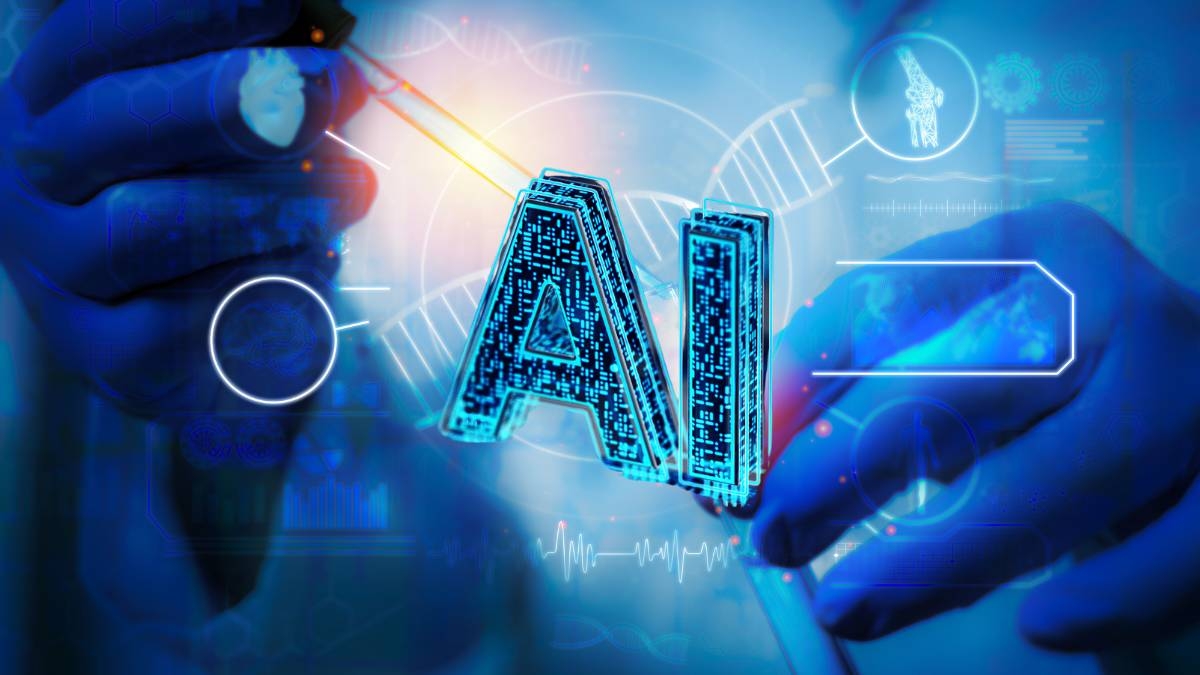
Although AI has not yet achieved major medical advances on its own, the industry already uses it to save time and costs and speed up trials.
consalud.es
Artificial intelligence (AI) has not yet solved the most complex challenge in drug development: discovering new molecules capable of transforming medicine. However, it is already significantly changing the less visible phases of the pharmaceutical process, according to executives from large companies in the sector.
During the recent JP Morgan Healthcare Conference, reported by Reuters, executives from seven major pharmaceutical companies and six biotechnology companies agreed that AI is helping to streamline key tasks such as identifying patients and centers for clinical trials, as well as drafting and managing documentation for regulators. These advances save weeks of intensive work and reduce dependence on manual progress and external contractors. Developing a new drug can take up to ten years and cost around $2 billion (€1.72 billion).
Developing a new drug can take up to ten years and cost around $2 billion.
One of the biggest bottlenecks is managing thousands of regulatory documents, which must remain consistent across different countries. According to Reuters, AstraZeneca confirms that this task consumes enormous resources. AI allows this information to be compiled, collated, and updated more quickly and accurately.
It is also transforming clinical trial enrollment, traditionally described as a leaky funnel due to participant dropouts. Venture capital-backed startups are using AI to improve patient outreach, education, selection, and scheduling.
It is transforming clinical trial enrollment.
Other companies such as GSK, Genmab, and ITM also report time savings and millions in cost savings, as well as plans to automate data analysis, clinical reports, and regulatory formats. However, analysts warn that it will still take between one and three years before the full impact of AI on the speed of drug development can be clearly measured.
Meanwhile, the great expectation remains the so-called “AI drug.” For some industry leaders, that promise has not yet fully materialized, although they claim that such molecules may already be in development.
 ES
ES
 EN
EN