
Farmaindustria participates in the Medical Oncology, Haematology and Oncohaematology Pharmacy Congress ‘Building Bridges’, where data management in biomedical research was discussed.
Farmaindustria.es
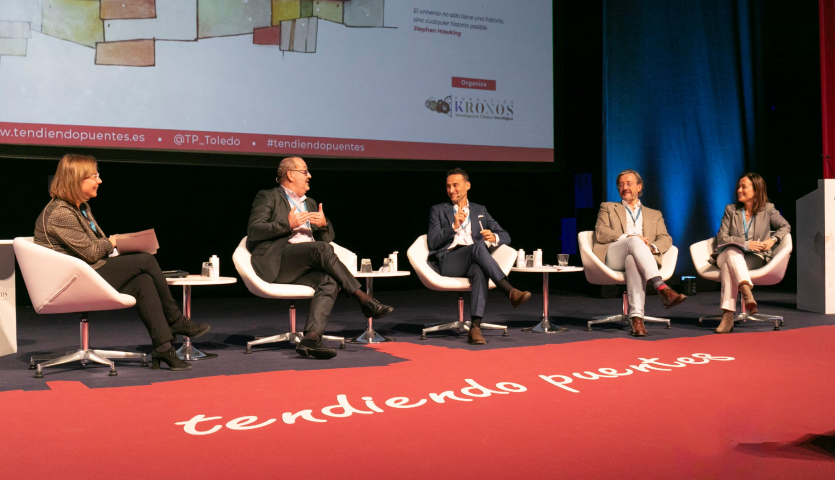
“The proposed Regulation for the creation of the European Health Data Space presents a great opportunity in the field of efficiency for research and innovation not only for health systems, but also for society in general”. This was highlighted by the director of Farmaindustria’s Clinical and Translational Research Department at the XI Congress of Medical Oncology, Haematology and Oncohaematology Pharmacy ‘Building Bridges’, held recently in Toledo, where data management in biomedical research was discussed.
Currently, the main challenge in this field, according to Martín Uranga, is to address the appropriate reuse of these data from a scientific, ethical, legal and technological point of view. As an example of good practice in this reuse, the Farmaindustria spokeswoman highlighted several public-private collaboration projects, such as the IMI-Harmony consortium, a European consortium coordinated from Spain, which aims to use big data to produce information that helps healthcare professionals in decision-making to improve the care of patients with haematological tumours. The conference also addressed the issue of consent and opt-out in the use of data. The European Parliament is currently discussing whether users could opt-out of sharing certain types of health data. For the Farmaindustria spokeswoman, a general opt-out mechanism would be unnecessary because all the protections and safeguards established in the Regulation are aimed precisely at avoiding any direct impact on citizens when their electronic health data is used. “An opt-out will discourage scientific research rather than incentivise it,” he said.
He also highlighted the importance of the ESMO-GROW Guideline, the first reporting guideline developed specifically for real-world oncology evidence studies, which aims to harmonise oncology research practices by providing recommendations on the validation evidence needed to present real-life data accurately and transparently. In this sense, he recalled that “the availability of these real-life data creates a great opportunity to complement clinical trial information, reduce uncertainty in the evaluation of new drugs, define patient subpopulations and areas of drug effectiveness, improve access to new drugs, enhance R&D, and ultimately improve the lives of patients”.
The round table discussion, moderated by Dr. Ana Clopés, from the Catalan Institute of Oncology, was also attended by Dr. Felipe Casado, from the Haematology Department of the University Hospital of Toledo; Dr. José Antonio Marcos, from the Pharmacy Department of the Virgen Macarena Hospital in Seville; Dr. Álvaro Rodríguez Lescure, from the Medical Oncology Department of the General Hospital of Elche, together with Amelia Martín Uranga.
Research Hub in Castilla y León
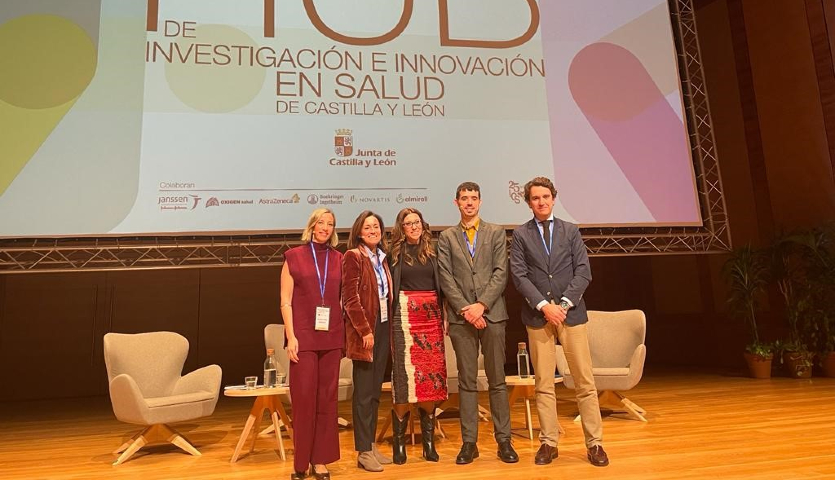
The director of Farmaindustria’s Clinical and Translational Research Department also participated these days in the ‘Castilla y León Health Research and Innovation Hub’, held in Valladolid on the occasion of the six-month Spanish Presidency of the Council of the European Union. During the event, the president of the regional executive, Alfonso Fernández Mañueco, presented the Strategic Plan for Health Research and Innovation 2023-2027, with the aim of using it as a lever for transforming the health, production and social model of the region. One of the day’s round tables was dedicated to discussing the R&D&I Strategy in health with conferences and round tables in which the spokesperson for Farmaindustria took part to explain the public-private collaboration programmes, which in the context of biomedical research are led and coordinated by the Associatio
n.
During the session, the interest of the regional authorities in promoting greater involvement of healthcare professionals in research tasks was highlighted, especially in the field of clinical trials, due to the value they bring to improving patient care. The work of the already consolidated research institutes, such as the one in Salamanca and the new one in Valladolid, was also presented, together with those soon to be created (in León and Burgos).
Within the framework of these institutes, the Junta will mobilise around 30 million euros in health research, creating collaboration networks between these centres. In this context, Farm
aindustria pointed out the opportunity to cooperate in the promotion of clinical research in primary care, as well as in the decentralised elements of clinical trials, aligned with the digital health strategy that is being implemented in the Community to improve interoperability between different levels of care, the promotion of data analytics and the exploitation of information in the NHS.

 ES
ES
 EN
EN