A review published in Recent Advances in Drug Delivery and Formulation analyses how these technologies are transforming various stages of the sector and examines the challenges affecting their implementation
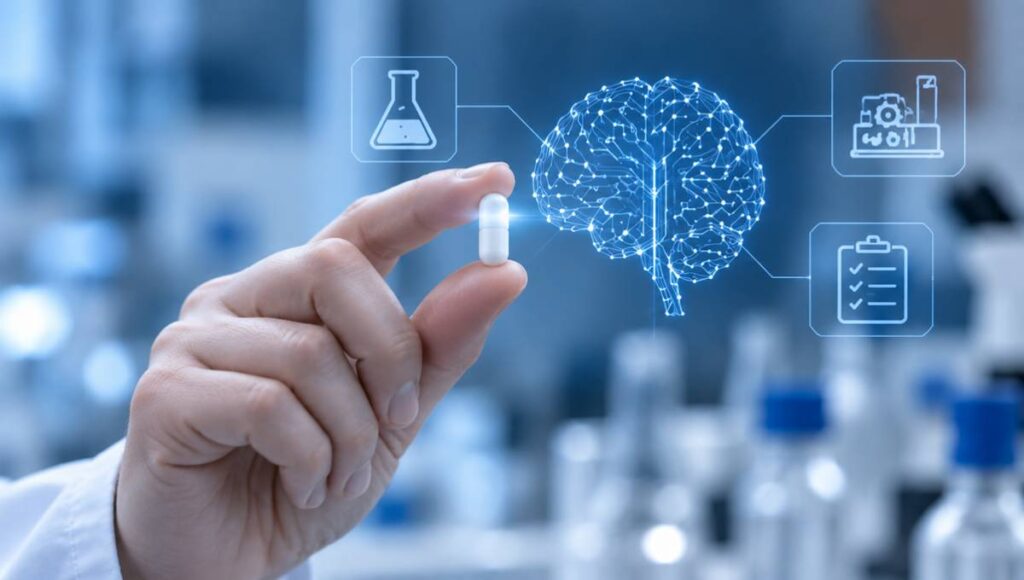
consalud.es / Artificial intelligence is gaining ground in the pharmaceutical industry
Artificial intelligence (AI) continues to expand its applications within the pharmaceutical industry, ranging from the identification of new therapeutic targets to the manufacture of medicines, clinical care and commercial distribution. In this context, a review published in Recent Advances in Drug Delivery and Formulation analyses how these technologies are transforming various stages of the sector and examines the challenges affecting their implementation.
The paper provides an overview of the current uses of AI in the pharmaceutical industry. Its authors, Sukanta Satapathy, Ganesh Patro and Santanu Shaw, address both the opportunities offered by these tools and the regulatory and cultural barriers that may hinder their adoption.
In the field of drug research and development, AI can help to identify therapeutic targets, detect promising compounds and optimise drug candidates. It is also applied to the development of formulations, with the aim of improving the selection and design processes for potential products. These applications can help to guide research, although the review does not suggest that the technology eliminates the need for experimental validation.
AI is also being incorporated into the design of clinical trials and the predictive models used during drug development. These tools enable the analysis of information to support study planning and the assessment of potential outcomes. Their usefulness depends, amongst other factors, on the quality of the data and the models’ ability to generate reliable predictions under real-world conditions.
In clinical practice, the review highlights the applications of AI in diagnosis, medical imaging analysis and the early detection of diseases. It also outlines its potential in personalised medicine and pharmacovigilance. In the latter area, computational tools can help analyse information relating to the safety of medicines, without replacing the relevant assessment and monitoring procedures.
‘The integration of AI requires addressing both its technical aspects and the conditions necessary for its responsible use’
These applications also extend to community and hospital pharmacies. According to the authors, AI can be used to review treatment plans and detect potential drug interactions. These functions can support healthcare professionals, although they require adequate supervision to prevent potential errors or system limitations from influencing clinical decisions.
In pharmaceutical manufacturing, these technologies are used to optimise processes, manage quality and improve the supply chain. The ability to analyse operational data can facilitate the identification of patterns and support decision-making in production and logistics. However, the implementation of these systems must be adapted to the quality and regulatory compliance requirements specific to the pharmaceutical industry.
The review also identifies applications in marketing, sales forecasting, market trend analysis and monitoring of regulatory compliance. Furthermore, it notes that academic research benefits from these tools. Taken together, these applications demonstrate that AI is not limited to drug discovery, but can play a role in various stages of drug development, evaluation, manufacture and market launch.
Despite these possibilities, the authors emphasise that “the adoption of AI faces obstacles”. These include compliance with regulatory requirements and cultural barriers within organisations. Therefore, they argue, “the integration of these technologies requires addressing both their technical aspects and the conditions necessary to use them responsibly”. Finally, the review suggests future lines of research and new opportunities, but does not in itself constitute proof that all the applications described improve clinical outcomes or industrial efficiency.
 ES
 EN