
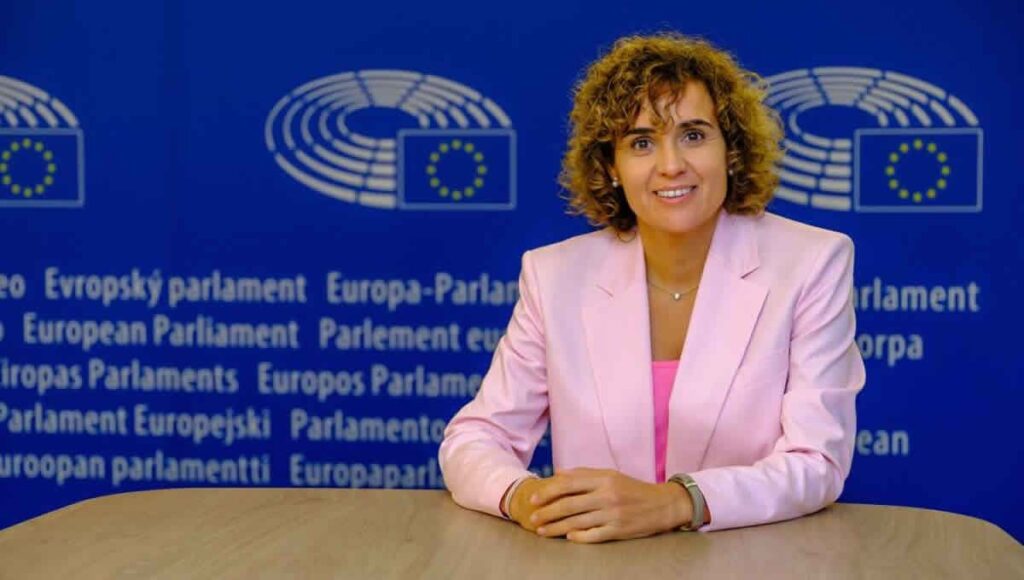
The First Vice-Chair of the EPP Group in the European Parliament discusses the EU’s main health challenges on Consalud.es: from pharmaceutical self-sufficiency and the promotion of biotechnology to the fight against cancer, children’s mental health and the shortage of healthcare professionals
consalud.es
Dolors Montserrat, First Vice-Chair of the EPP Group in the European Parliament, discusses on ConSalud.es the main health challenges facing the European Union and the priorities that will shape the remainder of the parliamentary term. The fight against cancer, the European Health Data Space, pharmaceutical autonomy, the promotion of biotechnology and the protection of children’s mental health are the main focus of her analysis, which also addresses the shortage of healthcare professionals and the need to strengthen European competitiveness.
You have recently been re-elected as first vice-chair of the EPP Group in the European Parliament. What will your health priorities be during the second half of the parliamentary term, and how significant will health be on the European agenda in the short term?
Health must remain an absolute priority for the European Union. The pandemic has taught us that no country can tackle major health challenges on its own, and that a stronger Europe also means a Europe capable of better protecting the health of its citizens.
Our top priority is to consolidate a genuine European Health Union and ensure that all Europeans have access to innovative, safe and affordable medicines. To achieve this, we need a strong, competitive European pharmaceutical industry capable of manufacturing within our borders. The new European Biotechnology Act, which we have been working on in recent months in the European Parliament, will be another pillar of the European Health Union that we want for our patients and for an industry that leads the ‘Made in Europe’ movement within the context of global supply chains.
‘Europe must strengthen coordination between Member States to reduce these inequalities and continue to allocate essential funding to implement European and national initiatives’
We must also continue to make progress in the fight against cancer, rare diseases and mental health issues, promote research and capitalise on the opportunities offered by new technologies. It is no coincidence that, whilst Europe is making progress in modernising its health policies, Spain has been stuck in a state of stagnation for eight years under Pedro Sánchez.
Five years after the adoption of the European Plan to Combat Cancer, inequalities in prevention, diagnosis and treatment persist. What are the main shortcomings and what should Europe do to reduce them?
The European Plan to Combat Cancer has marked a historic step forward, but there is still a great deal of work to be done. We cannot accept that a patient’s chances of surviving cancer should depend on the country in which they live, their postcode or their financial means.
The main shortcoming lies in the differences that continue to exist between Member States when it comes to implementing measures. We need to strengthen prevention against risk factors such as smoking, irresponsible alcohol consumption and unhealthy eating habits, expand screening and early diagnosis programmes, and speed up access to innovative treatments.
“We need to make progress on interoperability and ensure secure access to data, whilst always respecting patients’ privacy”
Furthermore, the fight against cancer does not end when a patient overcomes the disease. We must also ensure follow-up care, rehabilitation and a good quality of life for survivors. Europe must strengthen coordination between Member States to reduce these inequalities and continue to allocate essential funding to implement European and national initiatives.
Much of the coordination you refer to is linked to the European Health Data Space. What barriers are hindering its development, and how could it improve research, early diagnosis and the treatment of diseases such as cancer?
The European Health Data Space represents one of the greatest opportunities to transform medicine in Europe. We have millions of pieces of clinical data that can help us save lives, but we are not yet making the most of their full potential.
The main barrier is the fragmentation of our healthcare systems, which are often unable to communicate with one another. We need to make progress on their interoperability and ensure secure access to data, whilst always respecting patients’ privacy.
“We do not want a Europe where revolutionary treatments are available only to a select few. We must combine incentives for innovation with equitable access and sustainability.”
Connecting European healthcare systems will enable us to diagnose conditions earlier, conduct better research, develop more precise and personalised treatments, and ensure faster access for patients. But to capitalise on these opportunities, we also need to modernise our national legislation and have a government that places healthcare at the heart of its policy agenda – as will be the case under the leadership of Alberto Núñez Feijóo.
On another front, you have negotiated the reform of European pharmaceutical legislation and the EU has reached an agreement on the Critical Medicines Act. How will these initiatives help to reduce shortages and guarantee access to medicines?
These are two fundamental initiatives that address a priority I have been advocating for years: Europe must regain its pharmaceutical autonomy and ensure that no patient is left without treatment due to supply issues or because of the country in which they live.
I have negotiated the pharmaceutical package on behalf of the European Parliament, seeking a balance between patients’ access to medicines, the need to attract research, innovation and investment to Europe, and maintaining the sustainability of our healthcare systems. At the November plenary session in Strasbourg, we will adopt the final agreement with the Council, which will modernise our regulatory framework and facilitate the development of new treatments.
‘We cannot leave parents and teachers to face these digital and social media risks on their own. Europe has a responsibility to protect our children.’
For its part, the Critical Medicines Act will enable us to strengthen our production capacity, diversify supply chains and reduce our dependence on third countries. We advocate for a ‘Made in Europe’ pharmaceutical industry, with incentives to invest, conduct research and manufacture within our borders. Because innovation only makes sense if it reaches patients, and Europe must ensure faster and fairer access to treatments.
Europe wants to speed up the delivery of biotechnological innovation to patients. What does it need to compete with the United States and Asia and ensure fair access to new treatments?
We have world-leading research centres and a pharmaceutical industry with enormous capacity for innovation. But we cannot allow research to be carried out in Europe only for the investment and treatments of the future to then be transferred to the United States or Asia.
From Brussels, we are promoting the ‘Made in Europe’ industry and economy, and working to retain the talent of our healthcare professionals. How? For example, through a return programme for those who have left. With less red tape and more streamlined clinical trials, an area where Spain can take the lead. With sufficient staffing levels, as the Ministry of Health estimates a shortfall of 9,000 doctors by 2027.
“We need to simplify regulatory procedures, reduce bureaucratic burdens, facilitate clinical trials and provide a stable framework that attracts investment”
And with the next Framework Programme for Research, 2028–2034, with health at its heart. If we get it right, in ten years’ time a young doctor, a bioinformatician or a brilliant researcher will find here what they are currently seeking elsewhere: funding, data, technology and a career. And they will do so here.
We need to simplify regulatory procedures, reduce red tape, facilitate clinical trials and provide a stable framework that attracts investment. But there is one non-negotiable condition: we do not want a Europe where revolutionary treatments are accessible only to a select few. We must combine incentives for innovation with equitable access and the sustainability of our healthcare systems. Competitiveness and equity must go hand in hand.
As well as the pharmaceutical industry, the shortage of healthcare professionals particularly affects primary care and rural areas. What can the EU do to help Member States attract and retain professionals whilst respecting their competences?
As a former Minister for Health, I am well aware of the importance of having sufficient healthcare professionals who are well-trained and enjoy good working conditions. There can be no high-quality public healthcare without healthcare professionals. They are the very heart of our healthcare systems.
‘Europe can help tackle the shortage of healthcare professionals by boosting training, facilitating the recognition of professional qualifications and promoting cooperation between countries’
An ageing population and the difficulties in attracting and retaining professionals, particularly in primary care and rural areas, call for a long-term response. Although the organisation of healthcare is the responsibility of Member States, Europe can contribute by boosting training, facilitating the recognition of professional qualifications and promoting cooperation between countries.
Finally, I would like to ask you about an issue of growing concern in Europe: the health of children and adolescents in the face of the impact of screens and social media. What regulations should the EU introduce to protect minors?
The mental health of our children and adolescents is one of the great challenges of our time. I have been warning for years that we are facing a silent crisis that particularly affects the youngest members of society. New technologies offer great opportunities, but also risks such as cyberbullying, exposure to harmful content or addictive behaviour. We cannot leave parents and teachers to face these risks alone. Europe has a responsibility to protect our children.
We need legislation that compels digital platforms to fulfil their responsibilities, strengthens the protection of children and prevents commercial interests from taking precedence over their wellbeing. But legislation alone is not enough. We must also invest in digital education, support families and strengthen mental health prevention and care from an early age. Protecting our children must take precedence over any economic interest.
 ES
 EN