
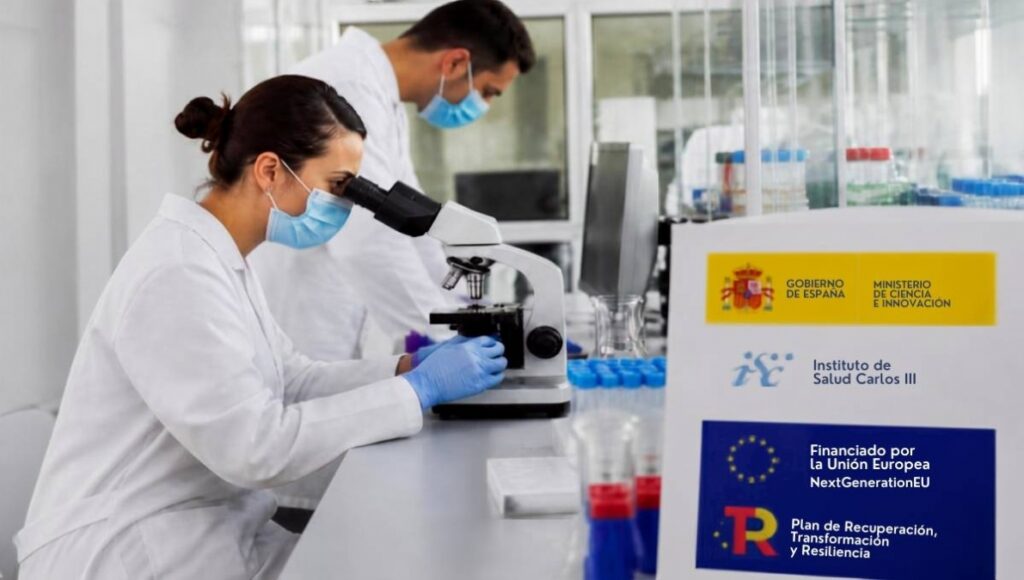
Miles de millones de euros se invierten cada año en investigación médica en España, una inversión desigual entre patologías y regiones, y que depende en gran medida de Europa y la industria
consalud.es
Medical research is a global challenge that encompasses individual, corporate, national and international efforts. There is always a shortage of financial resources, which has a direct impact on patients’ health. Following the United States’ announcement that it would cut international funding, countries have stepped up their own efforts, with increased budgets and strategies to bolster medical research.
Examples of this include Australia, with its National Health and Medical Research Strategy 2026–2036, which was finally published in May 2026, and the European Union, which is set to step up its commitment to innovative medicines. Not surprisingly, as noted in a report by Farmaindustria, “over the last two decades, Europe has lost 25 per cent of its R&D share, to the benefit of the United States and Asia”.
Spain, both as a member of the European Union and as an independent country, is also working to increase its investment in healthcare. According to data from the 2025 R&D Survey in the Pharmaceutical Industry, innovative pharmaceutical companies have increased their investment in R&D in Spain by 40 per cent over the last five years, reaching 1,775 million euros in 2025, with 1,647 million in consolidated investment in 2024. This forms part of the up to 4,500 million euros allocated to R&D in the health and biomedical sector, representing between 15 and 20 per cent of total R&D investment in Spain.
However, in medical research, not everything is R&D, nor does the funding come exclusively from direct public investment or the pharmaceutical industry. Understanding how expenditure is allocated also helps to identify the sectors in which it would be prudent to increase investment.
HOW DOES SPAIN INVEST IN RESEARCH?
From infrastructure to clinical trials, investment in medicine covers various aspects that enable research into new diagnostic methods, treatments or technologies that improve the management of different diseases and health conditions. In R&D, research into biomedicine and advanced therapies is currently one of the main areas of focus.
In 2024, the Ministry of Science, Innovation and Universities (MICIU) allocated 296 million euros to fund biomedical and healthcare R&D&I in Spain. This investment, part of the Strategic Action for Health (AES), was 12 per cent higher than in 2023. In 2026, the same programme was approved by the Council of Ministers under the management of the Carlos III Health Institute (ISCIII). The initial allocation for that year was 152 million, expandable by a further 40 million. Finally, in July, the Ministry of Science published the provisional decisions for 11 AES calls for proposals, in which 45.3 million euros were allocated to a total of 242 research staff contracts and 96 grants for health R&D&I.
The AES is not the only tool available to the central government for funding biomedical and health research in Spain. It is currently involved in the Strategic Project for Economic Recovery and Transformation for Cutting-edge Health 2025–2027. The Government has already reached 82 per cent of the €2,481 million in public investment allocated under this PERTE. This funding has already been used to launch major projects such as Terafront Farmatech, Spain’s first publicly-privately-funded pharmaceutical company; the National Centre for Neurotechnology; and the world’s first paediatric exoskeleton for personal use, which is 100 per cent Spanish-made.
“Our country has established itself as a leader in clinical research, a position to which the efforts of our companies undoubtedly contribute, as they drive more than 80 per cent of all clinical trials.”
Through the IMPaCT projects – Precision Medicine infrastructure linked to Science and Technology – the ISCIII will manage 50 million euros from 2026 to 2030 to continue the research that has been underway since 2021: Predictive Medicine (IMPaCT cohort), which studies a large, representative group of the Spanish population to identify risk factors and anticipate the onset of diseases; Data Science, which integrates and provides tools to analyse clinical, genomic and environmental data to generate knowledge useful for research and clinical practice; and Genomic Medicine, which incorporates complex genomic analyses in patients with undiagnosed rare diseases.
Most of the government funding for biomedical research is concentrated in Madrid and Catalonia, with some of it directed towards research in the major hospitals. One example is the Accredited Health Research Institute – Vall d’Hebron University Hospital (IIS-IR-HUVH), which will receive 2.6 million euros over the next three years, having been one of the centres selected for the creation of the state-funded CERTERA consortium. This consortium will have an administrative headquarters in Majadahonda and a scientific management centre in Catalonia, and is established as a networked R&D&I infrastructure created in Spain to promote the research, production and clinical development of advanced therapy medicinal products.
Research into the most innovative therapies focuses primarily on cancer. According to data from the Spanish Register of Clinical Trials (REEC), coordinated by the Spanish Agency for Medicines and Health Products (Aemps), the search for new anti-cancer drugs accounts for 4 out of every 10 trials and is the therapeutic area with the highest number of studies. In 2025, Spain authorised 962 clinical trials involving medicines, a record figure that places our country as the European leader in terms of the number of trials.
“Our country has established itself as a leader in clinical research, a position to which the efforts of our companies undoubtedly contribute, as they account for more than 80 per cent of all trials,” emphasised Javier Urzay, deputy director-general of Farmaindustria, referring to data from the 2025 R&D Survey of the Pharmaceutical Industry, which shows that in 2024, pharmaceutical companies allocated 1,003 million euros to conducting clinical trials in our country – the largest R&D expenditure category, representing an 11 per cent increase on the previous year.
THE EU’S ROLE IN SPANISH RESEARCH
In the field of advanced therapies and precision medicine, the European Union is also funding major cutting-edge biomedical projects. Between now and 2027, the Horizon Europe Health Cluster will be relaunched, alongside the European Partnership for Personalised Medicine (EP PerMed) and the specific calls for proposals under the EU4Health programme, complemented by digital initiatives in artificial intelligence applied to clinical and biomedical data.
“Spain is consolidating its position amongst the European countries best placed to attract competitive funding for excellence”
These projects carry significant weight in Spain. Between 2021 and 2024, Spanish organisations have secured grants totalling 4,507.6 million euros to carry out 4,813 research and innovation activities, which will result in investments of over 5,300 million euros in R&D&I in our country. As stated by the Ministry of Science, “these results place Spain in third place in the ranking of countries that have secured the most funding, with a return rate of 11.4 per cent of the EU-27 total (10.3 per cent of the total awarded), behind only Germany and France”. Furthermore, it is the country with the second-highest number of participations.
Furthermore, the European Research Council (ERC) has recently published the list of selected projects, and 29 projects of scientific excellence will be carried out at Spanish institutions with funding of 81.74 million euros. Of these, 11 focus on the life sciences and will be hosted by institutions such as the Spanish National Research Council (CSIC), the National Centre for Cardiovascular Research (CNIC), the Centre for Genomic Regulation (CRG) and the Barcelona Institute for Biomedical Research (IRB Barcelona).
The Ministry of Science considers these results to highlight the value of our country, which has increased its commitment to research in recent years. In the words of the Ministry of Science: “Spain is consolidating its position amongst the European countries with the greatest capacity to attract competitive funding for excellence and is strengthening its leadership in European scientific research”.
 ES
ES
 EN
EN