
Farmaindustria held its Annual General Meeting in Madrid on Thursday, during which the Association’s president warned of the risks and uncertainties affecting the sector due to the current geopolitical climate and US trade policies
The future European Biotechnology Act will be key to strengthening the innovation ecosystem and attracting new investment, she stated
The Association’s Director General, Juan Yermo, highlighted the opportunity Spain has in this context to become a global hub for innovation and the production of medicines
The Secretary of State for Health, Javier Padilla, spoke at the closing of the Assembly

Farmaindustria.es
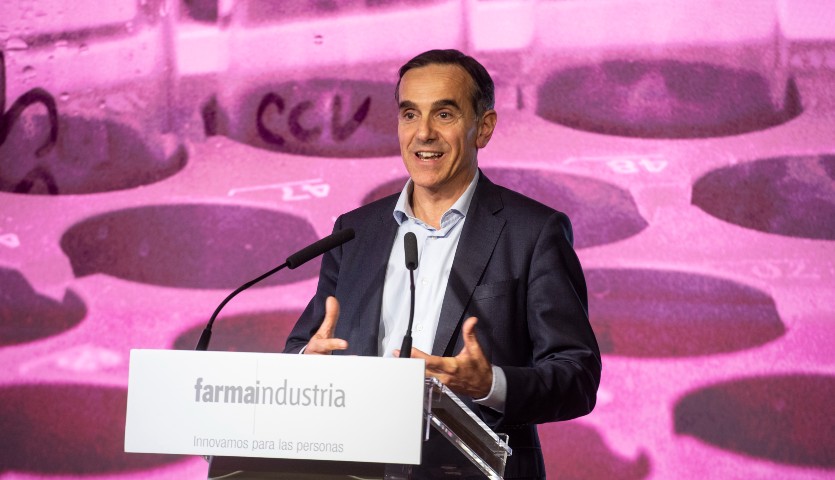
“Europe must take action to reverse the loss of competitiveness it has been suffering over the last two decades if it does not want to fall behind in biomedical research and, consequently, in its patients’ access to new treatments.” This was highlighted by the president of Farmaindustria, Fina Lladós Canela, during the Association’s Ordinary General Assembly, held this Thursday in Madrid, where the organisation’s Annual Report, the 2025 accounts and the budget for the 2026 financial year were approved.
As highlighted by Fina Lladós, Managing Director of the biotechnology firm Amgen in Spain, the pharmaceutical industry is facing a decisive moment, both in Spain and in Europe. “In the current context of significant global uncertainty, geopolitical tensions, regulatory changes and increasingly intense global competition, it is essential to have governments that send clear signals of their commitment to innovation and promote measures that strengthen the innovation ecosystem in the country and across our continent,” said Lladós, whose term as head of the Association ends this coming October.
The fact is that Europe needs to reclaim its role as a driving force behind biomedical innovation. In recent years, the continent has fallen behind the United States and Asia (China, in particular), which allocate more resources to research and have regulatory frameworks that are more stable and attractive to investment. “The United States has played a leading role for decades in funding research and drug development on a global scale. The time has come for Europe to reconsider how it values innovation and to step up its commitment to the biopharmaceutical innovation sector,” the president emphasised.
The president pointed out that every clinical trial conducted abroad, every patent registered in another region, means less competitiveness, fewer jobs and fewer options for European patients. “It is essential,” she stressed, “that Europe makes a firm commitment to innovation, the protection of industrial property and the creation of an attractive environment for investment in R&D.”

Farmaindustria.es
In this context, the establishment of new laws and regulatory frameworks, at both European and national levels, and the ability of healthcare systems to accurately assess the social value generated by innovative medicines, will determine how the medicines of the future are researched, developed and made available to patients. “Europe and Spain must redouble their efforts to protect and strengthen this jewel that is the innovative pharmaceutical industry. To do so, we need to strengthen the investment framework, making progress on the three pillars set out in the Strategy for the Pharmaceutical Industry in Spain: rapid access to medicines, more clinical trials and the expansion of our industrial base.
Opportunity presented by the European Biotechnology Act
Against this backdrop of geopolitical uncertainty and regulatory changes, the forthcoming European Biotechnology Act presents itself as the ideal regulatory development to reinforce the innovation ecosystem and attract new investment. “This initiative can facilitate collaboration between companies, research centres and public authorities, as well as drive advanced manufacturing, digitalisation and the creation of new businesses,” said Lladós.
Farmaindustria.es
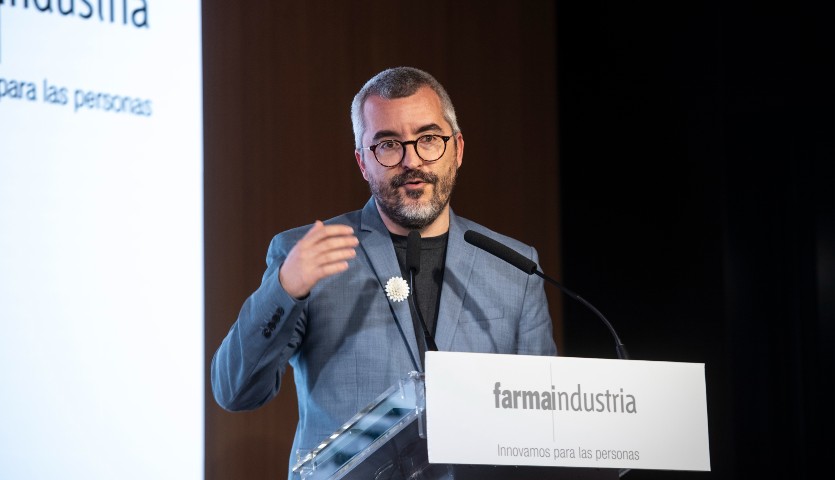
For his part, Juan Yermo, Director General of Farmaindustria, highlighted the enormous opportunity Spain has in this context to become a global hub for innovation and pharmaceutical production.
But for that to happen, he stated, significant steps still need to be taken at both national and European level that move in the right direction and demonstrate a strong commitment to biopharmaceutical innovation, to attracting investment and to our continent’s strategic autonomy. “The new Industry Act or the Profarma programme can be powerful tools to achieve this, but recently new opportunities have been emerging in the technological sphere, such as the Draft Digital Health Bill, for example, to drive a national project that will make us a European benchmark in the secondary use of health data and allow us to consolidate European leadership in clinical trials… and, why not, dream of global leadership,” he said.
The Director General of Farmaindustria emphasised that, with a solid foundation and regulatory stability, the pharmaceutical industry is well-prepared and has the potential to continue and expand its commitment to public health, the sustainability of the welfare state and the green transition. He also pointed out that every euro invested in medicines generates four euros in savings on pensions, sick leave and hospital expenditure, thereby contributing to social welfare and the sustainability of public finances. “Overall, a competitive biopharmaceutical industry strengthens the continent’s resilience and strategic autonomy in an increasingly complex and uncertain global environment. Investing in this sector means investing in better health, more innovation and a greater capacity to respond to future crises, placing Europe and Spain in a leading position that benefits both patients and society as a whole,” he said.
Farmaindustria.es
The Farmaindustria General Assembly was closed by the Secretary of State for Health, Javier Padilla.

 ES
ES
 EN
EN